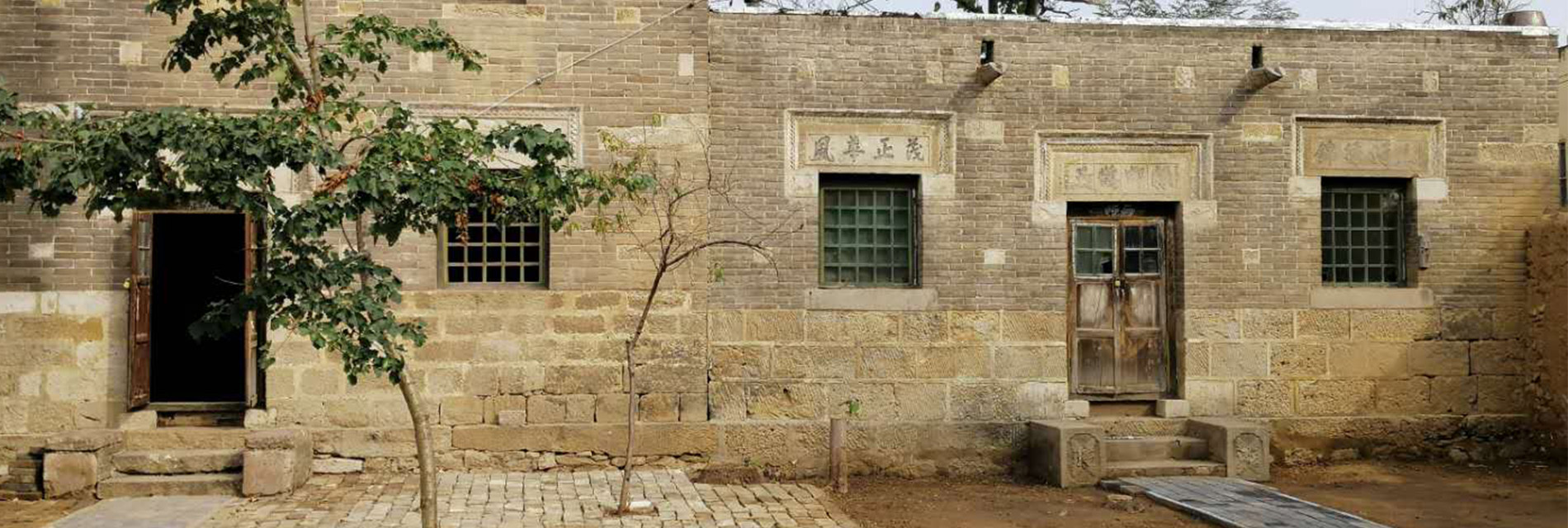
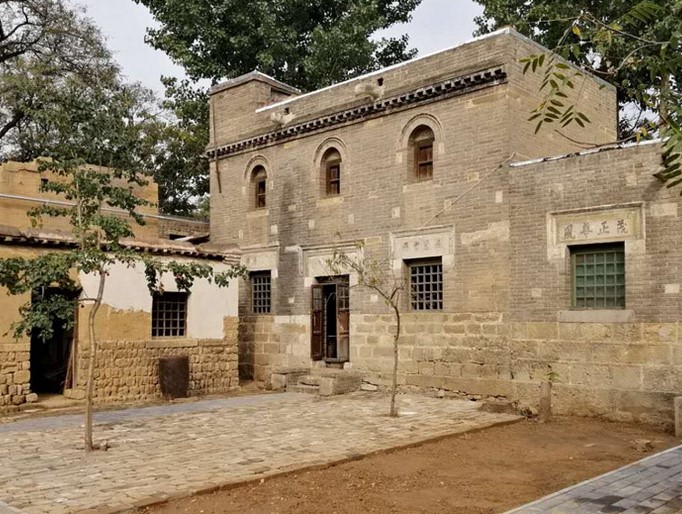
Residential office of the leaders of each column
Residence office of chief of staff of Shanxi Hebei Shandong Henan field army
This courtyard is the place where Li Da, chief of staff of the Shanxi Hebei Shandong Henan field army, lived and worked during the "Shilin conference" held by Liu Bocheng, commander of the Liu Deng army, and Deng Xiaoping, political commissar, in June 1947. Li Da, born on April 19, 1905, was born in Mei County, Shaanxi Province. In his early years, he joined the patriotic student movement, and later was admitted to Feng Yuxiang's Second Military Academy of the northwest army. After graduation, he served as platoon commander and company commander of the national revolutionary army. In December 1931, he participated in the Ningdu uprising. He joined the Communist Party of China in 1932 and served successively as company commander, division chief of staff, director of military staff office and chief of staff of the Chinese workers' and peasants' Red Army. He took part in the anti "encirclement and suppression" campaign in the Hunan Jiangxi Soviet Area and participated in the establishment of the Hunan Hubei Sichuan Guizhou Soviet Area and the long march. During the period of resisting US aggression and aiding Korea, he served as chief of staff of the Chinese people's Volunteer Army. In November 1954, he served as Deputy Minister of national defense of the people's Republic of China, deputy director of training director department of PLA, and director of planning department and supervision department. He was awarded the rank of general in 1955. He was appointed Deputy Chief of the general staff of the PLA in 1972. Li Da died in Beijing on July 12, 1993 at the age of 88.

First column commander's residence office
This courtyard is the place where Yang Yong, commander of the first column of the Shanxi Hebei Shandong Henan field army, lived and worked during the "Shilin conference" held by Liu Bocheng, commander of Liu Deng's army, and Deng Xiaoping, political commissar, in June 1947. Yang Yong, born on October 28, 1913, formerly known as Yang Shijun, was born in Liuyang County, Hunan Province. He joined the Communist Youth League of China in 1927. In 1930, he joined the Chinese workers' and peasants' Red Army, and in the same year he was transferred from the League to the Communist Party of China. During the war of liberation, in the campaign of Southwest Shandong, a precedent was created for the field army of Shanxi, Hebei, Shandong and Henan to attack the key points alone and annihilate one division and two brigades of the Kuomintang army. During the period of resisting US aggression and aiding Korea, he served as deputy commander, chief of staff and commander of the volunteer army. After returning home, he served as deputy chief of general staff of the PLA, member of the Standing Committee and Deputy Secretary General of the Central Military Commission of the Communist Party of China. He died in Beijing on January 6, 1983 at the age of 70.

Residence office of the second column Commander
This courtyard is the place where Chen zaidao, commander of the second column of the Shanxi Hebei Shandong Henan field army, lived and worked during the "Shilin conference" held by Liu Bocheng, commander of Liu Deng's army, and Deng Xiaoping, political commissar, in June 1947. Chen zaidao was born in chengjiachong, Chengmagang Town, Macheng City, Hubei Province on January 24, 1909. Since April 1926, he has successively joined the peasant association and the peasant self-defense army. In September 1927, after participating in the Autumn Harvest Uprising at the southern foot of the Dabie Mountains, he took part in the jute uprising in November of the same year, and was incorporated into the Eastern Hubei army of the industrial and agricultural revolutionary army along with the peasant self-defense army. He joined the Communist Party of China in 1928. Since the summer of the same year, he has successively served as platoon commander and company commander of the 11th army of the Chinese workers' and peasants' Red Army, commander of the 3rd Battalion of the 32nd regiment of the 11th division of the 4th Red Army, deputy commander and commander of the 31st regiment of the 11th Red Army, deputy commander of the 386 brigade of the Eighth Route Army, commander of the eastward column of the Eighth Route Army, commander of the second column of the Shanxi Hebei Shandong Henan field army and commander of the Southern Hebei military region, He is the commander of Henan military region, deputy commander of Central South military region and commander of Henan military region, deputy director of Supervision Department of armed forces of the people's Liberation Army and commander of Wuhan military region, deputy commander of Fuzhou military region, consultant of the Military Commission of the CPC Central Committee, commander of railway corps and member of the Central Military Commission of the Communist Party of China. He was awarded the rank of general in 1955. He died in Beijing on April 6, 1993 at the age of 84.

Residence office of the third column Commander
This courtyard is the place where Chen Xilian, the head of the third column of the Shanxi Hebei Shandong Henan field army, lived and worked during the "Shilin conference" held by Liu Bocheng, commander of Liu Deng's army, and Deng Xiaoping, political commissar, in June 1947. Chen Xilian, born on January 4, 1915, was born in Hongan County, Hubei Province. In 1929, he joined the Chinese workers' and peasants' Red Army. He joined the Communist Party of China in 1930. Participated in the long march. During the Anti Japanese War, he served as brigade commander and divisional commander of the 129th division of the Eighth Route Army; in the war of liberation, he successively served as commander of the column and corps of the field army of Shanxi, Hebei, Shandong and Henan; after the founding of new China, he successively served as the first Secretary of Chongqing Municipal Committee, artillery commander of the Military Commission, commander of Shenyang Military Region, commander of Beijing Military Region, and member of the Standing Committee of the Central Military Commission Regular work. He was awarded the rank of general in 1955. He is an excellent member of the Communist Party of China, a loyal communist fighter, and a veteran proletarian revolutionary and strategist.



PublicNumber

Program
